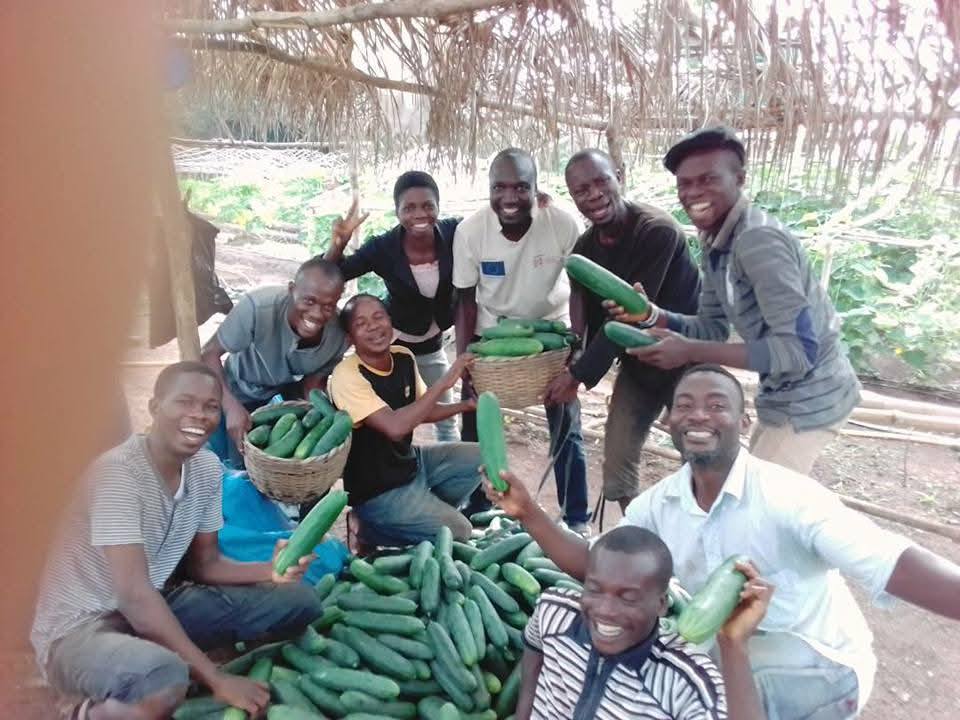
Most profitable crops to farm in Nigeria is a question farmers ask me all the time.
Let's settle one question today.
“Yinka, which crop is the most profitable crop to farm in Nigeria?”
Farmers ask me this question all the time.
And sometimes they expect me to give them one crop.
“Plant this one. You will make money.”
But I won't tell you that.
Because it is not that simple.
A crop can be profitable for one farmer and unprofitable for another.
Why?
Because farming profit depends on many things:
Cost.
Yield.
Selling price.
Market.
Location.
Timing.
Management.
Post-harvest losses.
Access to buyers.
So instead of asking only:
“What is the most profitable crop?”
I want you to start asking:
“Which crop gives me the best business opportunity based on my land, capital, market and ability to manage it?”
That is a much better question.
Before we discuss crops, let's understand the business.
A simple way to look at it is:
Revenue depends on:
Quantity sold × Selling price
But your cost can include:
So a crop with a high selling price is not automatically a profitable crop.
Cucumber is one crop many farmers consider because it can be produced within a relatively short production cycle compared with long-duration tree crops.
But don't hear:
“Cucumber is profitable”
and immediately rush to plant.
Ask:
Cucumber can be an interesting enterprise for farmers who understand production and market timing.
But short production time does not automatically mean easy money.
Tomato is another crop with strong demand across Nigeria.
People eat tomato.
Restaurants use tomato.
Food businesses use tomato.
Markets trade tomato every day.
But tomato farming can also be demanding.
You need to think about:
And remember something important:
If many farmers harvest at the same time and prices fall, your revenue can be affected.
So tomato farming requires both production knowledge and market knowledge.
Pepper is another important crop for farmers to consider.
There are different types and varieties of pepper, and the right choice depends on your target market and production conditions.
Before planting pepper, understand:
And don't forget the business side.
Ask:
“Who will buy my pepper?”
Not:
“Where can I sell it after harvest?”
There is a difference.
Maize is one of the major crops produced in Nigeria and appears prominently in national agricultural survey data.
It is used for food, feed and other purposes.
But maize farming still needs proper planning.
Before planting, calculate:
Then consider:
What will I sell it for?
Who will buy it?
Can I store it if the immediate price isn't attractive?
Those questions can make a significant difference.
Cassava is another major crop in Nigeria.
It is important not only as a food crop but also because of its different processing and value-chain opportunities.
Nigeria's agricultural authorities have identified cassava among strategic value chains with investment potential.
But again...
Don't plant cassava simply because somebody says:
“Cassava is profitable.”
Study your opportunity.
Ask:
And remember:
The buyer matters.
Watermelon can also be attractive to farmers because of consumer demand and its relatively short production cycle.
But the same principle applies.
Don't look only at the selling price.
Consider:
A crop can sell at a good price and still disappoint you if your production cost is too high.
Rice is another major agricultural value chain in Nigeria.
But rice farming can require significant planning around:
For some farmers, rice may make sense.
For others, another crop may be a better fit.
The best crop is the one that fits your particular farming business.
Yam is another major food crop in Nigeria.
But commercial yam production requires planning around:
The labour requirements alone can significantly influence your cost.
So again:
Don't look at selling price alone.
Look at the whole production system.
Soybean is another crop worth studying, particularly where there is access to suitable markets and processing/value-chain opportunities.
Before planting, investigate:
Your market research should come before your investment.
Now let's talk about a crop very close to my heart. 🌴
Coconut.
Coconut is different from many annual crops because you are thinking long-term.
You are not simply planting today and harvesting in a few months.
You are establishing a plantation that can produce over many years when properly managed.
That means your decision-making must also be long-term.
You need to consider:
This is why I always tell people:
Don't rush to plant coconut simply because you have land. Plan the plantation properly.
We have already created several coconut farming resources here at Farmvilla to help farmers understand the crop better.
Now we can answer the question.
Your most profitable crop depends on:
What grows well there?
Is the soil suitable?
Can you provide the required water?
Can you comfortably finance the production cycle?
Do you understand how to manage the crop?
Who will buy?
When will you harvest?
How much are you spending?
What can you realistically receive?
How much of what you produce actually gets sold?
That is why I don't like telling farmers:
“This is the number-one crop in Nigeria.”
It sounds attractive.
But farming is more complicated than that.
Here is a simple process.
If you're starting from scratch, see our step-by-step guide on how to start profitable farming in Nigeria.
Who needs the crop?
What does the crop need?
How much will it take to produce?
How much can you realistically expect to harvest?
Don't use one person's selling price as your business plan.
Study the market.
Expected quantity × realistic selling price
Expected revenue − total cost
What could go wrong?
Now you can make your decision.
Let's say Farmer A is considering Crop A.
He expects:
Revenue: ₦2,500,000
His estimated production and selling costs are:
₦1,800,000
Potential gross margin:
₦700,000
Farmer B is considering Crop B.
Expected revenue:
₦2,100,000
Estimated costs:
₦1,000,000
Potential gross margin:
₦1,100,000
Which crop is better?
If you looked only at revenue, you might choose Crop A.
But after looking at the costs:
Crop B has the better potential margin in this simplified example.
This is why farmers must learn to think beyond:
“How much does this crop sell for?”
Ask:
“How much do I keep after producing and selling it?”
This is one of the biggest lessons I want you to take away from this article.
Your crop is not your profit.
Your sale is what turns the crop into revenue.
And your revenue minus your costs determines your profit.
So before planting, ask:
Who is my buyer?
Then ask:
What does my buyer need?
That could influence:
This market-first thinking is increasingly emphasized in Nigeria's agricultural policy discussions, with stronger market systems and better farmer access to higher-value markets identified as important to improving farm incomes.
You will see posts saying:
“Plant this crop and make millions!”
Be careful.
Ask:
What was the production cost?
What was the actual yield?
What was the selling price?
Where was the farm?
What season was it?
Who bought the produce?
How much labour was used?
Were losses included?
Was the figure revenue or actual profit?
Those questions will save you from making expensive decisions based on somebody else's headline.
Once you understand how to evaluate crops, you are no longer dependent on somebody telling you:
“Plant cucumber.”
or:
“Plant tomato.”
or:
“Plant maize.”
You can investigate the opportunity yourself.
You can compare:
Crop A vs Crop B
based on:
That is a much more powerful farming skill.
At Farm4Profit Academy, we don't want you to simply memorize a list of “profitable crops.”
We want you to understand how to think like a profitable farmer.
You should be able to look at a crop and ask:
“Is this a good business opportunity for me?”
You should understand:
Because farming is not just:
Plant → Harvest.
It is:
Research → Plan → Produce → Market → Sell → Calculate → Improve.
That's the Farm4Profit mindset.
So, what is the most profitable crop to farm in Nigeria?
My answer is:
The crop you can produce efficiently, sell into a real market, manage properly and still make a worthwhile return after your costs.
Don't chase hype.
Understand the numbers.
Don't plant because everybody is planting.
Understand the market.
Don't wait until harvest before looking for buyers.
Start marketing early.
Don't spend blindly.
Budget before planting.
And most importantly:
Don't just learn how to plant. Learn how to make the farm profitable.
This is exactly what Farm4Profit Academy, the leading crop farming school in Nigeria, is designed to teach.
If you want to understand how to choose crops, plan production, manage costs, market your produce and build a profitable farming business, Farm4Profit Academy can help you develop that foundation.
Classes begin: November 1, 2026
Enrollment closes: October 28, 2026
👉 Enroll in Farm4Profit Academy and learn how to farm with profit in mind.
#farmritewithYinka

